
Offering 01
ForgeCell process module
A field-actuation and thermal-control process head designed to clarify a wire-fed metal melt pool as the solidification front advances.
View system
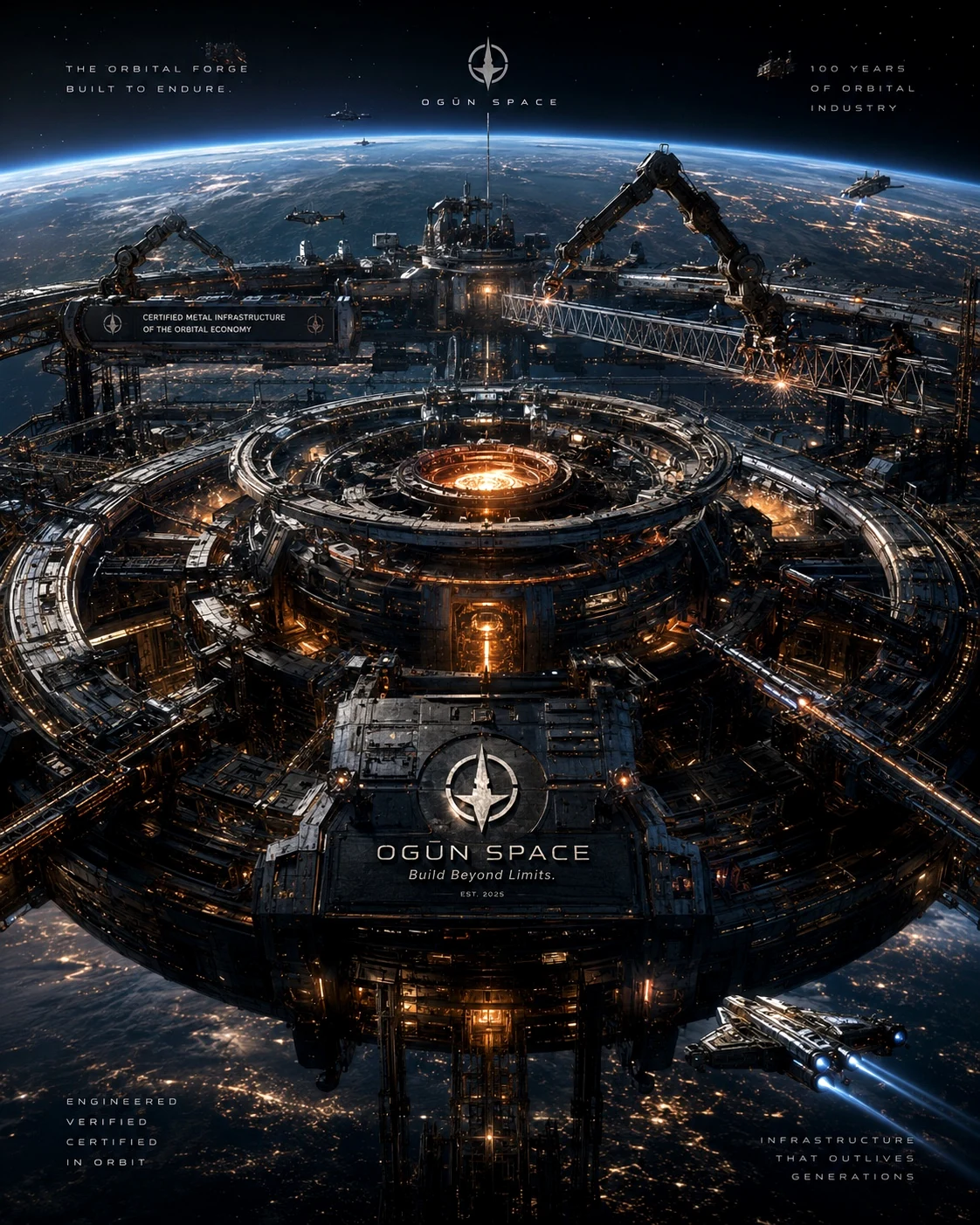
Ogun Space is developing the process physics and qualification data required to manufacture dense, load-bearing metal structures in orbit, without relying on gravity or post-process hot isostatic pressing.
Spacecraft are designed around what can survive launch and fit inside a fairing. Ogun is developing the manufacturing layer that lets orbital structures be designed around the mission instead.

Depositing metal in microgravity is only the beginning. Ogun focuses on active defect clearing during solidification, then translates the result into process specifications, materials allowables, nondestructive evaluation, and mission-assurance evidence.
The initial program is designed to determine whether field-driven clarification can outrun the solidification front at a useful structural thickness. These are research targets, not demonstrated performance.
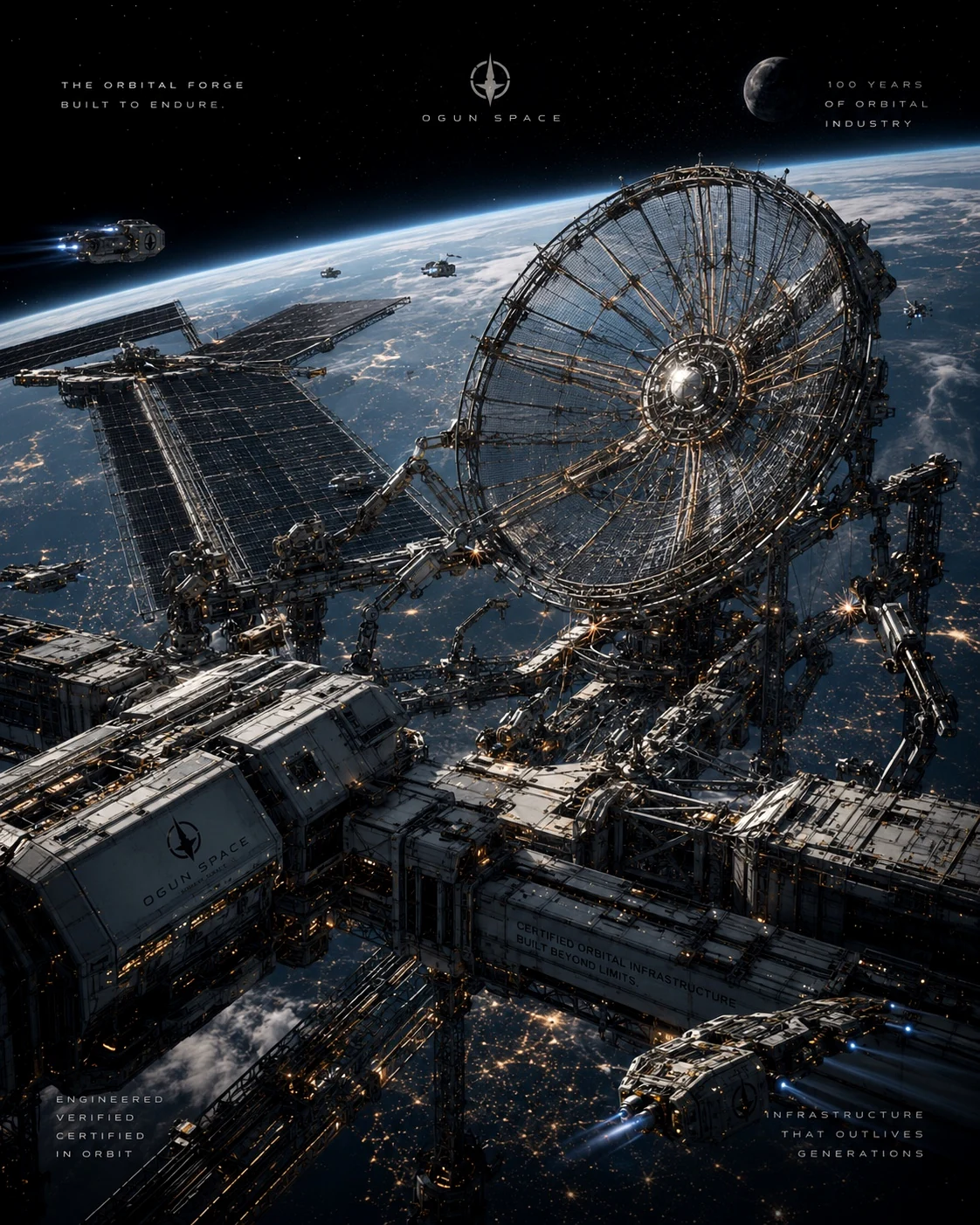
Large antennas, telescope backbones, power trusses, and structural frames are constrained by launch volume and deployment complexity. Ogun's beachhead is the qualified orbital member that can replace a folded, hinge-heavy architecture with a continuous structure manufactured after launch.
Explore target programsA staged product system separates the core physics from integration, qualification, and orbital operations. Customers can enter at the material, process, component, or hosted-manufacturing layer.
A field-actuation and thermal-control process head designed to clarify a wire-fed metal melt pool as the solidification front advances.
View system
Mission-specific member production with process traceability, NDE records, allowables development, and fracture-control support.
View service
A planned free-flyer or hosted platform for recurring metal deposition, clarification, inspection, and structural assembly campaigns.
View platform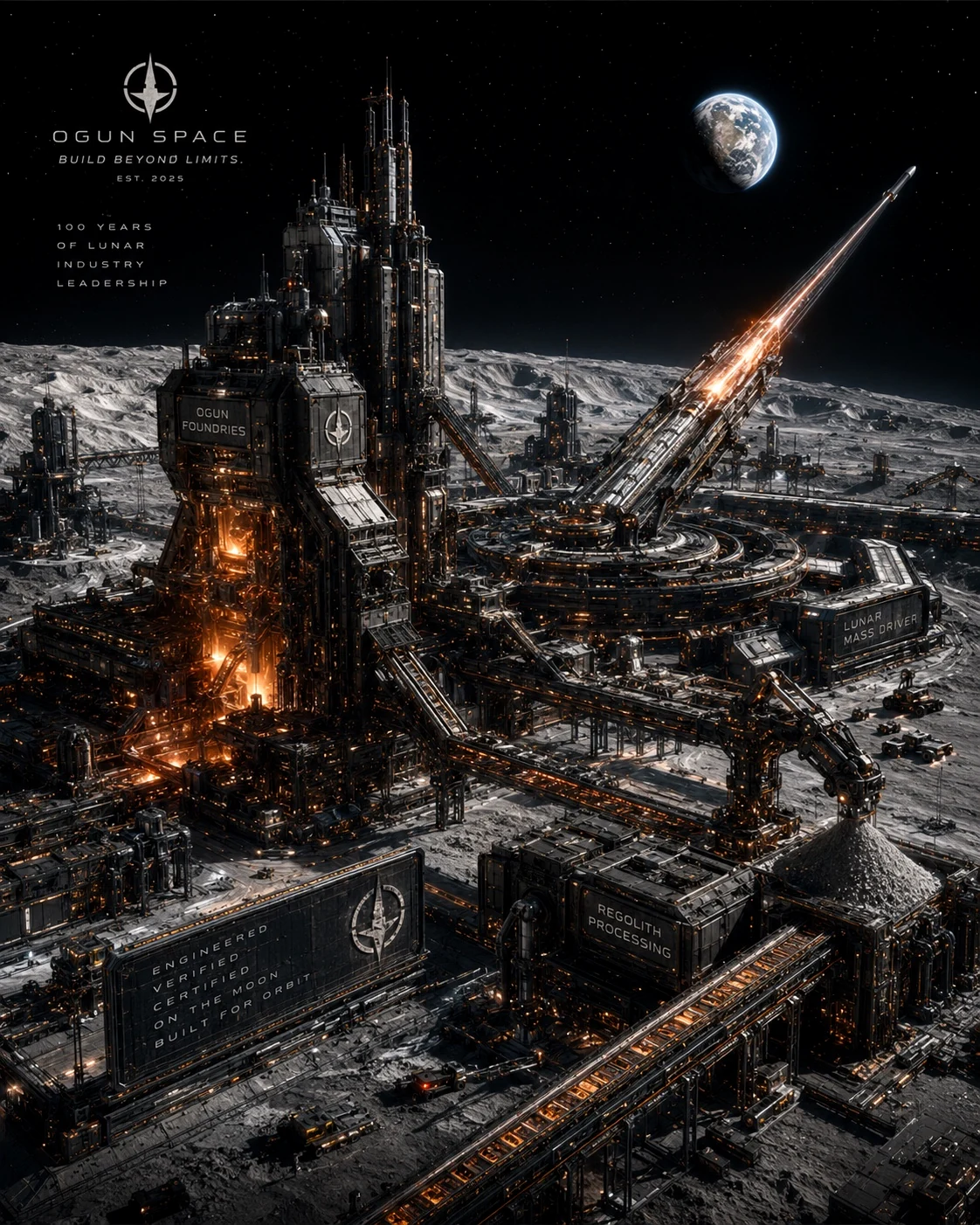
The same certification stack can extend from launch-fed wire stock to recycled orbital metal and, later, in-situ lunar or Martian feedstock. The long-term objective is not a single printer. It is an industrial standard for structural metal made away from Earth.
Ogun is structuring early collaborations with satellite primes, aperture developers, mission-assurance teams, microgravity research providers, metals laboratories, NDE specialists, and orbital robotics companies.
Identify the fairing, deployment, stiffness, thermal, or repair constraint that an orbital-made metal member could remove.
Set alloy, cross-section, defect tolerance, loading, inspection, and interface requirements before hardware design begins.
Map coupons, allowables, NDE, fracture control, mission assurance, and held-out validation to a flight acceptance case.
Integrate the process with a microgravity platform and produce the first mission-specific structural article.